Bicycle Brake Pad Safety Guide: How to Ensure Stable Bonding Between Friction Material and Backing Plate Under Operating Conditions
In bicycle braking systems, brake pads—although among the smallest components—are critical to rider safety. Whether it is a mountain bike repeatedly braking on long downhill sections, or an e-bike braking under high mass and high kinetic energy, brake pads must withstand mechanical shear forces, thermal buildup, and environmental exposure within a very limited volume.
Among the many possible failure modes, separation between the friction material and the metal backing plate remains one of the most critical and high-risk scenarios. Once debonding occurs, braking force can drop significantly, and in severe cases the braking system may fail to function properly. As a result, reducing the risk of separation during the design and manufacturing stages is a key issue that cannot be ignored in the brake-pad industry.
This article explains how modern bicycle brake pads ensure bonding stability and operational safety through multiple approaches, covering failure mechanisms, structural design, process control, and validation testing.
- Why Is There a Risk of Separation Between Friction Material and Backing Plate?
1.1 Shear Forces During Braking
When the rider pulls the brake lever, the caliper pistons press the pads against the rotating disc. The tangential friction force generated at the disc surface continuously acts on the bonding interface between the friction material and the backing plate. This shear force is applied during every braking event. Over long-term use, insufficient bonding design can gradually weaken interface stability.
1.2 Material Fatigue Caused by Thermal Cycling
In real-world use, bicycle brake pads typically operate at temperatures between 100–250 °C. Under long descents, heavy loads, or continuous braking, the friction surface temperature may momentarily approach 300–400 °C.
Repeated heating and cooling cause micro-movements at the interface due to differences in thermal expansion coefficients between the metal backing plate and the friction material. Over time, these micro-strains can induce fatigue at the bonding interface, increasing the risk of separation.
1.3 Environmental Moisture and Interfacial Corrosion
Compared with automotive systems, bicycles operate in much more open environments. Rain, muddy conditions, or high humidity in coastal regions can allow moisture to penetrate through micro-pores in the friction material and reach the backing plate surface. If corrosion protection is insufficient, oxidation-induced volume expansion can generate internal stresses at the interface, compromising long-term bonding stability. - Key Structural and Design Approaches to Reduce Separation Risk
To address these challenges, modern bicycle brake pads rarely rely on a single solution. Instead, they employ multi-layer and composite structural designs to improve bonding reliability.
2.1 Use of an Intermediate Layer (Underlayer)
Adding an intermediate layer between the friction material and the backing plate is a common design approach. The primary function of this layer is to enhance bonding stability between the composite friction material and the metal substrate. With appropriate formulations and structural design, it can also absorb part of the vibration energy, improving overall braking feel.
2.2 Control of Hot Pressing and Curing Processes
Friction materials are typically resin-based composites whose performance is highly dependent on processing conditions. Precise control of pressure, temperature, and time profiles reduces internal porosity, improves interfacial contact with the backing plate, and ensures structural integrity within the actual operating temperature range.
2.3 Anti-Corrosion and Surface Treatment of Backing Plates
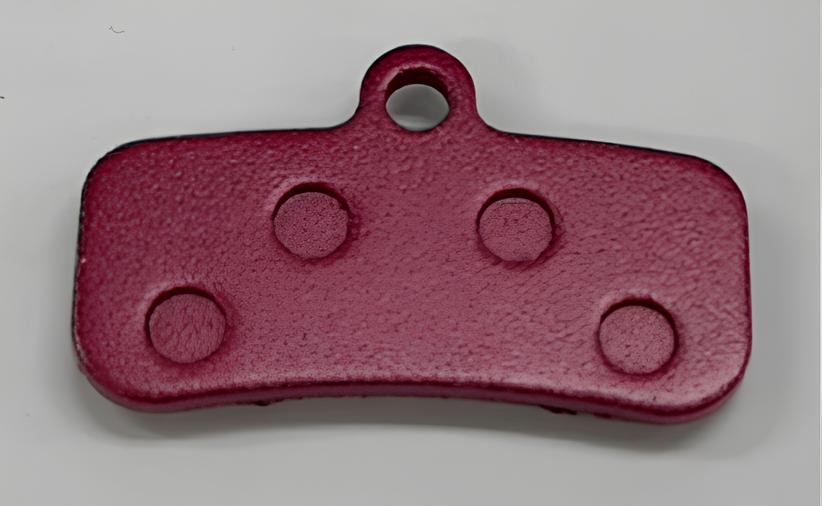
To mitigate long-term corrosion risk, backing plates are usually treated with anti-rust processes. These may include surface roughening combined with corrosion-resistant coatings, or electro-coating processes that provide uniform coverage. Such treatments reduce direct moisture contact with the metal surface and help maintain interfacial stability over time. - Key Tests During Manufacturing and Validation
During product development and quality control, manufacturers typically use multiple tests to verify bonding reliability.
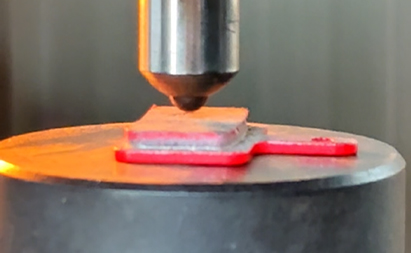
3.1 Shear Strength Verification
By applying lateral loads, the bonding stability between the friction material and the backing plate is evaluated under elevated temperatures. In practice, performance is often assessed based on load capacity per unit area, ensuring sufficient safety margin above actual braking loads.
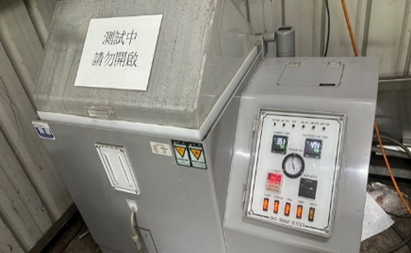
3.2 Environmental and Salt Spray Testing
Depending on product positioning and target markets, salt spray test durations may range from 24 hours to over 120 hours. These tests simulate humid or coastal environments and assess whether corrosion protection and bonding integrity are affected.
3.3 Thermal Cycling Durability Testing
Repeated heating and cooling cycles are used to examine whether cracks or abnormal changes occur at the bonding interface under long-term thermal cycling, helping estimate structural stability over the product's service life. - Quality Indicators Observable by Consumers and Buyers
Although laboratory testing is not accessible to most riders or procurement teams, preliminary judgments can still be made based on visual inspection and product information.
Examples include whether the backing plate incorporates holes or mechanical features, whether the interface between friction material and backing plate appears tight and uniform, whether corrosion protection is clearly specified, and whether the product is rated for high-load or e-bike applications. These details often reflect the maturity of the product's structural design and process control. - Conclusion: Bonding Stability Is a Foundation of Bicycle Braking Safety
Although bicycle brake pads generally operate at lower temperatures than automotive braking systems, their small size, rapid heat dissipation, and highly variable environments make bonding stability even more critical. Through the combined application of mechanical design, material engineering, and process control, the risk of separation between friction material and backing plate can be effectively reduced, ensuring stable braking performance under designed operating conditions.
For consumers, understanding these design principles supports safer and more application-appropriate choices when selecting brake pads.

![[R&D Insights] No More Screeching in Rainy Road Cycling: NVH-Driven Silent Brake Pad Development](/upload-files/faq/nvh-driven-silent-brake-pad-innovation/nvh-driven-silent-brake-pad-innovation.jpg "[R&D Insights] No More Screeching in Rainy Road Cycling: NVH-Driven Silent Brake Pad Development")