Why Does the Steering Wheel Shake When Braking? 5 Common Causes and Solutions
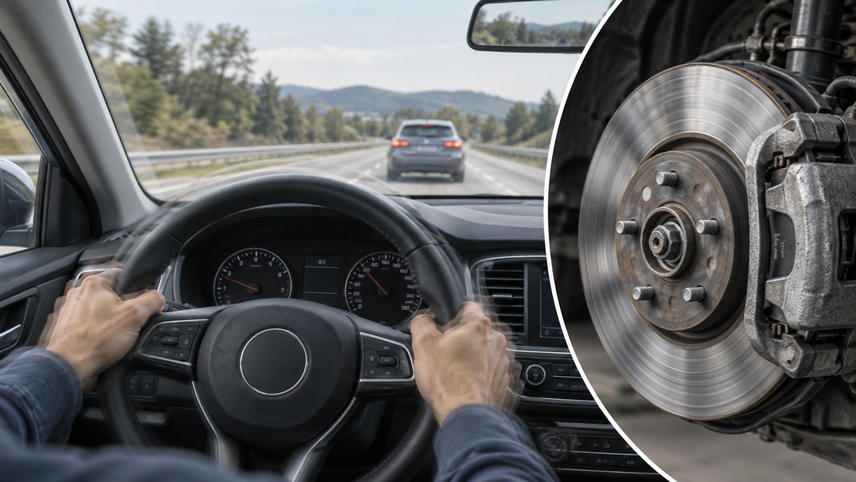
If the steering wheel or brake pedal vibrates during braking, the cause is not always a warped rotor. Rotor condition, installation, heat, corrosion, and the match between the brake pad and rotor can all play a role.
Article Summary
- Brake judder is not always caused by rotor deformation.
- DTV and run-out are different issues.
- Heat, corrosion, and brake drag can also cause or worsen judder.
- Brake pad and rotor compatibility can affect long-term wear and stability.
- When diagnosing judder, the rotor, brake pads, caliper, and installation condition should all be checked.
What Are the Common Signs of Brake Judder?
Common signs of brake judder include:
- Noticeable steering wheel vibration during braking
- A pulsing or kicking sensation through the brake pedal
- Vibration through the vehicle body or chassis
- Roughness or mild vibration during the first few brake applications after the vehicle has been parked
On some vehicles, the vibration may be more noticeable within certain speed ranges, but the symptoms can vary by vehicle and condition.
Why Does Brake Judder Happen?
Brake judder is not always caused by a single issue. Five common causes are listed below.
1. DTV: Uneven Rotor Thickness
Thickness varies around the rotor circumference, which can cause cyclic changes in contact force during braking.
2. Run-out: Rotor Lateral Deviation
The friction surface moves slightly from side to side in the axial direction as the rotor turns.
3. Heat-Related Changes to the Rotor Surface
Repeated heavy braking can raise local rotor temperatures and change the condition of the friction surface.
4. Corrosion or Uneven Surface Condition
Rust or deposits on the rotor surface can create uneven friction conditions.
5. Brake Drag / Incomplete Caliper Release
The brake pad does not fully release from the rotor, causing prolonged localized contact.
These causes may occur individually or together. Judder related to DTV is often cyclic, while corrosion-related judder may be intermittent or irregular. Not all brake judder follows a fixed pattern.
What Is DTV?
DTV (Disc Thickness Variation)refers to differences in thickness measured at different positions around the same rotor.
In simple terms, if some parts of the rotor are slightly thicker and others slightly thinner, the clamping condition can vary as the rotor turns. This may create cyclic changes that are felt through the steering wheel or brake pedal.
The amount of thickness variation that becomes noticeable differs by vehicle manufacturer and model. Actual evaluation should follow the applicable vehicle or OEM specification.
What Is the Difference Between Run-out and DTV?
Run-outdescribes axial movement of the friction surface as the rotor rotates. It is a different measurement from DTV.
| Item | DTV | Run-out |
|---|---|---|
| Meaning | Rotor thickness variation | Rotor run-out |
| Simple explanation | Thickness differs around the rotor | The rotor moves axially as it turns |
| Measurement concept | Compare thickness at multiple positions around the rotor | Observe axial movement while the rotor rotates |
| Same issue? | No | No |
Simple comparison of DTV and run-out (scroll horizontally on mobile)
You can think of run-out as whether the rotor wobbles as it turns, while DTV refers to whether the rotor thickness is uniform. Over time, excessive run-out may contribute to uneven wear and an increase in DTV, but this is not an absolute cause-and-effect relationship and should be evaluated case by case.
Why Can Heat Make Brake Judder More Noticeable?
During repeated heavy braking or prolonged downhill braking, local rotor temperatures can rise quickly. Uneven heating may cause localized changes in rotor shape or hardness.
This type of judder may lessen as temperatures drop, but if uneven wear, hot spots, or permanent changes have developed, the vibration may continue and further inspection is needed.
Can Rotor Corrosion Cause Brake Judder?
After a vehicle has been parked for some time, moisture can cause rust to form on the rotor surface. If the corrosion is uneven, friction conditions can vary across the rotor, causing roughness or mild vibration that may be irregular or intermittent.
If the corrosion is only light surface rust, it will often improve after several normal brake applications. If corrosion is more severe, the rotor surface is uneven, or the vibration continues, further inspection is recommended.
Why Is Brake Drag Important?
"Brake drag" means the pad does not fully release from the rotor after braking and remains in slight contact, which may result from incomplete piston return or another caliper issue.
Prolonged localized contact can raise rotor temperature and accelerate wear. It may also contribute to thickness variation or judder and is an inspection point that can easily be overlooked.
Can Brake Pads Affect Brake Judder?
Brake pads and rotors work together as a friction system. Contact pressure, friction behavior, and heat distribution are influenced by the properties of both components.
Brake pad material can affect:
- Friction stability
- Rotor wear
- High-temperature performance
- Long-term rotor surface condition
If the brake pad and rotor are poorly matched, the risk of uneven wear or unstable braking behavior may increase. Saying that a harder or softer brake pad is always better is an oversimplification. What matters is compatibility between the pad and rotor.
A good brake pad should provide sufficient braking force while also balancing friction stability, wear, high-temperature performance, and long-term compatibility with the rotor.
What Should Be Checked When Brake Judder Occurs?
Confirm When the Judder Occurs
Note whether the vibration occurs at high or low speed, when cold, or after repeated heavy braking.
Inspect the Brake Pads and Caliper
Check pad wear and confirm that the piston returns properly.
Check Run-out
Measure axial rotor deviation while the rotor rotates.
Check DTV
Measure thickness differences at multiple positions around the rotor.
Inspect the Rotor Surface
Check for corrosion, deposits, or obvious wear marks.
Road-Test After Repair
Road-test the vehicle to confirm whether the vibration has improved.
A step-by-step inspection makes it easier to identify the actual source of the problem instead of relying on guesswork.
Can Replacing the Brake Pads Alone Fix Brake Judder?
If the root cause is rotor thickness variation, run-out, brake drag, or installation accuracy, replacing the brake pads alone may not fully solve the issue. Conversely, replacing only the rotor without correcting drag or installation problems may allow the judder to return.
Brake judder often needs to be evaluated across the rotor, brake pads, caliper, and installation condition rather than focusing on a single component.
How Can the Risk of Brake Judder Be Reduced?
For Vehicle Owners
Avoid prolonged repeated heavy braking; have brake drag or unusual noise checked early; keep mounting surfaces clean and installation accurate when replacing rotors; and use stable, vehicle-compatible brake pads.
For Product and Manufacturing Teams
Maintain stable friction behavior, control wear characteristics, ensure good pad-rotor compatibility, and maintain stable performance under high-temperature conditions.
How Does ADUI Brake Support OEM / ODM Projects?
ADUI Brake specializes in friction materials and brake pad development for automotive, motorcycle, and bicycle applications. For different vehicle types and usage requirements, we develop and adjust products based on friction performance, wear characteristics, high-temperature behavior, and pad-rotor compatibility, while supporting OEM, ODM, and aftermarket project needs.
- Friction material development and tuning
- Friction and wear performance evaluation
- Matching for high-temperature and application conditions
- Material matching for different rotors and brake systems
- OEM / ODM / Aftermarket project support
Frequently Asked Questions
Is brake judder always caused by a warped rotor?
Not necessarily. DTV, run-out, heat, corrosion, brake drag, and pad-rotor compatibility can all contribute to brake judder.
What is the difference between DTV and run-out?
Run-out is axial rotor deviation during rotation, while DTV is thickness variation around the rotor circumference. They are different measurements, but over time they may influence each other.
What can cause steering wheel vibration during high-speed braking?
Possible causes include rotor thickness variation, run-out, heat-related surface changes, or pad-rotor compatibility. The actual cause should be confirmed through inspection.
Can replacing the brake pads alone fix brake judder?
Not necessarily. If the root cause is the rotor, caliper, or installation accuracy, replacing only the brake pads may not fully solve the problem. The cause should be identified first.
Is brake vibration normal after a vehicle has been parked for several days?
This can be related to light surface rust on the rotor and often improves after several normal brake applications. If the vibration remains noticeable, further inspection is recommended.
Conclusion
The cause may be DTV, run-out, heat, corrosion, brake drag, or a combination of several factors.
A good brake pad should not only provide sufficient braking force but also maintain stable long-term compatibility with the rotor to reduce the risk of uneven wear and unstable braking behavior. If the vibration remains significant or occurs with other braking abnormalities, further inspection is recommended.