Automotive Braking System Deep Dive: How Rotor Rust and Caliper Operation Affect Driving Noise, and Solutions
In modern automotive engineering, the braking system is core technology that ensures safe vehicle operation. For readers with a basic foundation in physics and chemistry, studying brake noise is not only about solving an auditory nuisance, but also one of the best ways to understand friction mechanics, materials science, and mechanical structures in practice. When we press the brake pedal, components inside the system undergo intense energy conversion. If any link in the chain experiences a physical or chemical change, it will send a warning through noise and vibration.
This article will examine in detail the spatial pattern of rotor rust, the impact of high-hardness iron oxide (rust) on bedding-in, and the chain reactions caused by abnormal caliper operation.
Basic Structure and Physical Fundamentals of the Braking System
Automotive braking follows the law of conservation of energy. While a vehicle is moving, it has "kinetic energy." To bring it to a stop, friction must convert kinetic energy into "thermal energy."
- Core Components
- Brake rotor: A metal disc that rotates with the wheel, most commonly made of gray cast iron.
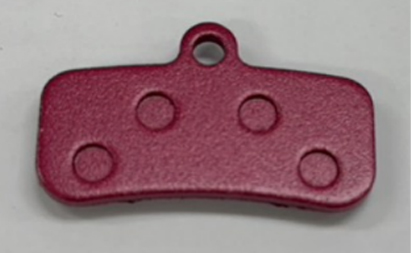
- Brake pads: Friction consumables mounted in the caliper that clamp the rotor.
- Brake caliper: A mechanical device that receives hydraulic input and pushes the brake pads.
- How Friction Is Generated
When the hydraulic piston pushes the brake pads against the rotor, the friction force at the contact surface applies a counter-torque to the rotating wheel. This process requires relatively flat surfaces on both the rotor and the pads to achieve maximum contact area and performance.
Spatial Pattern of Rotor Rust: Why It Appears on the Outermost and Innermost Rings
When observing a vehicle's brake rotor, it is common to see the middle region remain shiny while the edges are covered with reddish-brown rust. This spatial distribution is not random; it is determined by mechanical design and physical effects.
- Swept Area vs. Non-swept Area
In engineering design, the pad's coverage area is usually slightly smaller than the rotor's total pressure-bearing surface.- Swept area: The region the pads can directly contact. During normal driving, each braking event removes newly formed trace oxides, so the metal color remains.
- Non-swept area (outermost and innermost rings): The pads cannot reach these two regions. This means oxidation in humid environments (iron combining with water and oxygen) is not mechanically cleaned away, so rust accumulates there over time.
- Accumulation of Environmental Particles and Salts
As the wheel rotates, centrifugal force flings rainwater, mud, and environmental salts toward the rotor's "outermost ring." These chemicals accelerate metal oxidation, causing the rust layer at the rotor edge to be thicker than in the central area.
Material Properties of Rust: How Iron Oxide Hardness Affects Bedding-in
This is the key scientific point affecting braking performance: rust is not only a change in appearance, but also a change in "material hardness."
- Hardness Comparison: Iron Oxide vs. Cast Iron
Brake rotors are typically made of cast iron, with a Mohs hardness of about 4 to 5. However, the ferric oxide particles (Fe₂O₃) formed after rusting can reach about 5.5 to 6.5 on the Mohs scale. This means iron oxide particles are physically harder than the original metal rotor. - Non-uniform Surface Hardness of the Rotor
When mottled rust appears on the rotor surface, the pressure-bearing area becomes an interwoven region of "softer cast iron" and "very hard iron oxide." This non-homogeneous hardness can lead to:- Unstable coefficient of friction: During rotation, the brake pad alternately contacts regions with different hardness.
- Resonance excitation: Fluctuating friction forces can trigger small, high-frequency vibrations, which are the physical source of sharp squeal.
- Uneven Pad Bedding-in and Groove Formation
Because iron oxide particles are hard and abrasive, they behave like "metal sandpaper" during friction.- Loss of flatness: Protruding hard rust lumps over-cut specific areas of the brake pad.
- Groove formation: Especially on the most severely rusted outer ring, high-hardness iron oxide can act like an engraving tool, cutting deep circular grooves into the brake pad. This makes the pad surface no longer flat, ultimately reducing the effective contact area between the two and lowering braking force.
How Abnormal Brake Caliper Operation Contributes to Noise
Beyond material changes in the rotor itself, the caliper that applies force is also critical.
- Sliding Pins and Return Mechanism
The caliper must be able to slide slightly left and right to ensure balanced force on both pads. If the guide sliding pins are obstructed due to dried grease or dust intrusion, the pads can engage the rotor at an incorrect angle, causing abnormal vibration and amplifying noise. This is the most common situation, but also the one most easily overlooked. - Brake Pad Wear Indicator Tab
This is a mechanical safety design. When the brake pad wears to its safe limit, the preset metal tab contacts the rotor. This is a deliberate physical contact intended to use high-frequency noise to alert the driver to replace components, preventing damage to the rotor base material.
Comprehensive Solutions for Rotor Rust and Abnormal Noise
For different severity levels, engineering practice has standard handling procedures:
- Light Rust: Regular Bedding-in Method
If rust is only a light surface film and there is no obvious vibration, it can be resolved through driving. On a safe road section, perform several stable medium-speed braking events, using friction-generated heat and shear stress to remove the initial oxide layer. - Moderate Rust: Professional Chemical Cleaning and Mechanical Rust Removal
If rust is limited to the rotor edges and has not formed deep grooves, use a dedicated brake cleaner with brushes to clean the non-swept areas, reducing the chance that rust flakes break off and fall into the swept surface to cause wear. - Severe Rust: Machining (Rotor Resurfacing)
If hard rust has caused non-uniform rotor hardness and the brake pedal pulses when braking, a professional workshop will remove the rotor for precision cutting. The principle is to remove the surface layer that is uneven in hardness and flatness, exposing the inner cast-iron base with uniform physical properties, allowing the pads to re-establish ideal flat bedding-in with the rotor. - Deep Damage:Systematic Replacement
If rotor thickness drops below the safety limit due to deep corrosion, or if the pads have grooves that cannot be corrected, both the rotor and pads should be replaced together. It is recommended to choose products with anti-rust coatings, which have stronger chemical resistance in non-swept areas (outermost and innermost rings).
Daily Preventive Measures
After understanding the principles, we can take proactive preventive actions:
- Drying After Car Washing: After washing, rotors are very prone to forming iron oxide. It is recommended to drive and lightly apply the brakes a few times after washing, using friction heat to evaporate moisture.
- Regular Lubrication of Key Areas: Every two years or when replacing brake pads, clean again and apply dedicated high-temperature grease to the caliper sliding pins.
- Regular Driving to Prevent Rust Buildup: If the vehicle must be parked long-term in a humid environment, start and drive it every few days, using physical bedding-in to break the cycle of chemical oxidation.
Conclusion
Brake noise is not simply a component failure, but a sign of changing physical properties. The outermost and innermost rings of the rotor become breeding grounds for corrosion due to lack of mechanical cleaning; more importantly, the high hardness of iron oxide disrupts the uniformity of rotor surface hardness, causing irregular grooves and uneven bedding-in of the brake pads.
By deeply understanding these mechanical details, we can assess vehicle condition more rationally. Maintaining rotor and braking surface flatness and cleanliness is the foundation for safety, quiet operation, and performance.